
Leaning posts, broken boards, sagging gates, storm damage or an aging fence? Learn which problems may be repairable, when replacement makes more sense, and what to check before requesting an estimate.
For Peoria and surrounding communities, view service areas. Project availability is confirmed by the participating contractor.
Leaning or loose fence posts: May indicate deterioration, movement in the soil, a damaged footing or inadequate support. A repair needs to address why the post moved—not simply straighten the visible panel.
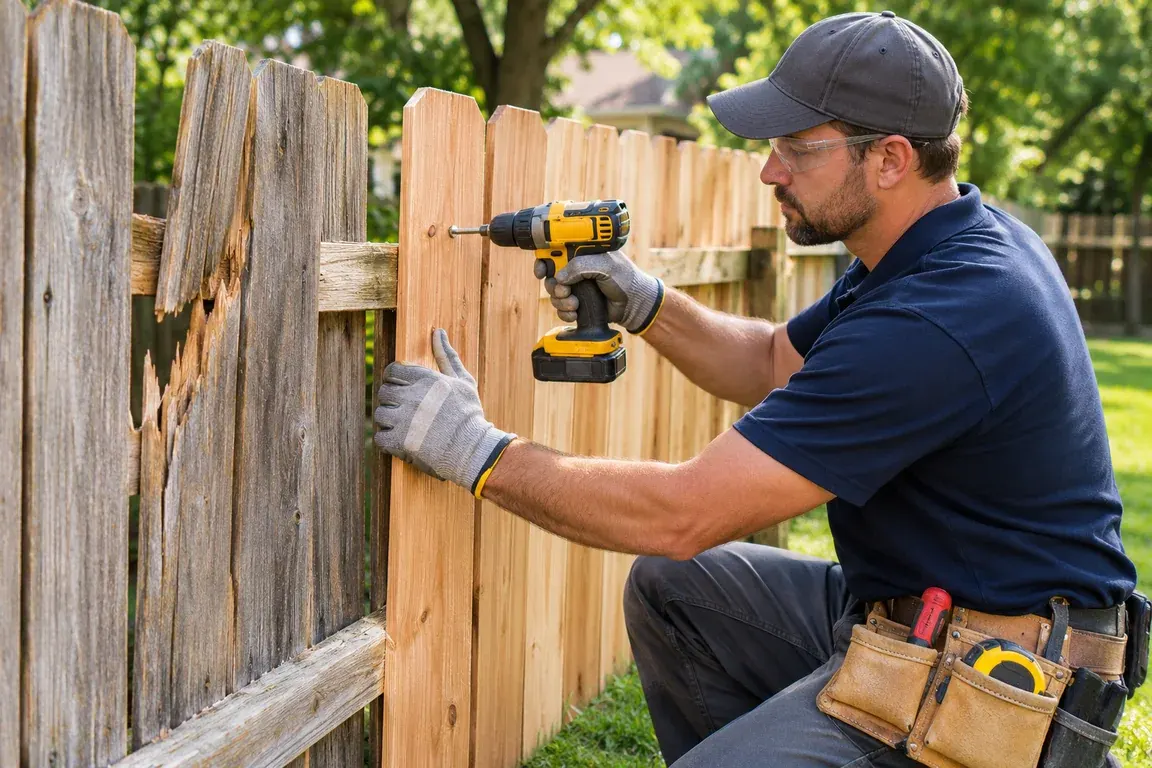
Broken boards or damaged panels: Localized damage may be repairable if neighboring rails and posts are sound. Extensive splitting, rot or recurring failure can change that assessment.
Sagging or sticking gates: Hinges, latches, posts and gate framing all affect alignment. Sometimes hardware adjustment is sufficient; sometimes the supporting post must be repaired.
Storm or wind damage: Look for loose sections, cracked posts and compromised attachments, including problems that are less visible from the street.
Check for leaning sections, loose pickets, movement at the base of posts, rusted fittings, decaying wood, exposed fasteners, gate misalignment and sharp or unstable components.
Safety first: Keep people and pets clear of unstable panels or gates. Avoid attempting a repair where the structure may fall or where digging could disturb underground utilities.
Repair may be appropriate when damage is limited to a few boards, one gate, hardware, or a small number of soundly accessible sections and the rest of the fence remains stable.
Replacement may be more practical when multiple posts are failing, rot is widespread, materials are too deteriorated to support new parts, or recurring repairs are approaching the expense of replacement.
Age alone does not settle the question. The condition of the posts and rails, availability of matching materials, total repair scope and homeowner goals all matter.
Ask for the proposed repair scope and, where justified, a separate replacement option so you can compare durability and total cost.
Wood: Evaluate rot, split rails, post stability and whether replacement boards can match.
Vinyl: Cracked panels, rails or posts may require compatible replacement components; color and profile availability can matter.
Chain-link: Bent rails, damaged fabric, loose tension and gate hardware can sometimes be repaired separately.
Aluminum: Damaged sections or fasteners may be replaceable, depending on the system and availability of matching parts.
In Peoria, seasonal freeze-thaw changes, saturated ground, strong winds and fallen limbs can contribute to shifting posts or damaged fence sections. The cause matters: a replacement panel alone may not solve a recurring post problem.
Before resetting posts or changing the fence line, verify property boundaries and check relevant local rules. For projects within the City of Peoria, review the city's fence zoning verification guidance. Requirements differ outside city limits.
If a repair requires digging or resetting posts, the excavator should arrange a locate request through JULIE / Illinois 811 with the legally required advance notice and confirm that affected utilities have responded before excavation. Privately owned underground lines may require separate locating.
Cost depends on the number and type of damaged components, fence material, post or footing work, access, matching-part availability, debris removal and whether a gate needs rebuilding.
For an accurate comparison, describe the damage clearly and ask what is included, what is excluded and whether the underlying cause will be corrected.
1. Identify the cause. A useful assessment looks beyond the visible damage. For example, a sagging gate may be caused by hinges, a warped frame or a shifting post.
2. Check the surrounding sections. The condition of nearby posts, rails and connections matters. Repairing one broken panel may not be worthwhile when the entire run is unstable.
3. Discuss compatible materials. Matching an older fence can be difficult if a vinyl profile, color, aluminum system or wood dimension is no longer available. Ask whether the replacement will match or be noticeably different.
4. Define the repair scope. A clear proposal should specify the components to be repaired or replaced, whether post and footing work is included, cleanup expectations, and any limits on matching materials.
Have these details ready to help the contractor understand the problem:
If a storm caused the damage, photograph conditions before moving debris when safe to do so. Coverage under a homeowners insurance policy depends on its terms and the circumstances; ask your insurer rather than assuming repairs will be covered.
For severe damage or a fence that may collapse, keep people and pets away until the area can be evaluated.
Sometimes. If most panels are sound and the problem is limited to one or a few posts, targeted repair may be possible. Widespread post failure or deterioration may justify replacement.
Surface wear does not always mean a post has failed, but serious rot at ground level or a post that no longer supports the fence safely usually calls for replacement or a contractor-designed structural repair. Reinforcing decayed wood without addressing the underlying weakness may not last. Have the post, footing and adjacent rails assessed before deciding.
Many gate problems involve hinges, latches, alignment or the supporting post. The right solution depends on whether the gate frame and posts are structurally sound.
Have the entire affected run inspected, not only visibly broken boards. Wind and impacts can loosen posts, rails and connections. Keep away from unstable sections until assessed.
It depends on how much sound material remains. Localized board damage may be economical to fix, but widespread rot or multiple failing posts can make replacement more sensible.
Provide your location, fence material, approximate damaged length, photos if available, and whether posts or gates are involved. The participating contractor can review the request and discuss next steps.
Describe what is damaged, where the fence is located and whether it is wood, vinyl, chain-link or aluminum. Include the condition of posts and gates if known.
For questions or a free estimate, call us directly or visit our Contact Us page.
Fence installation and repair information for homeowners in Peoria, Illinois. Estimate requests are connected with an independent participating contractor.